
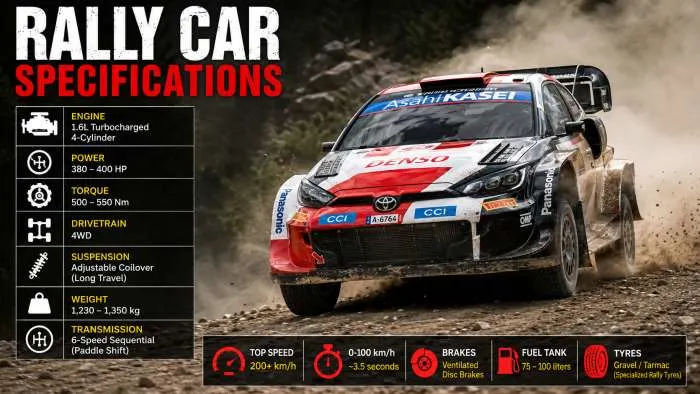
The roar of a rally car echoes through the forest. Rocks spit from the tires. The crowd holds their breath. What makes these machines so unstoppable? Rally car specifications hold the answer. Every rally car packs a turbocharged punch with all-wheel drive grip. The top WRC monsters push past 500 horsepower. They scream past 120 mph on straight sections. But speed tells only half the story.
Real rallying demands control on loose gravel, mud, and ice. The cars must survive brutal jumps and razor-sharp turns. Rally car specifications shift between classes. Rally1 sits at the top with hybrid boost and race-bred suspension. This guide walks you through rally car engine specs, rally car top speed, and rally car horsepower without the confusing jargon.
What Makes Rally Car Specifications Unique?
Rally cars are not ordinary vehicles. They are special machines built to race on dirt, snow, ice, and pavement. Unlike track racing cars, rally cars must survive on rough public roads in terrible weather. The rally car specifications focus entirely on toughness and quick steering.
They have strong metal cages inside to protect the drivers. They use heavy-duty springs to land safely after huge jumps. Their engines make lots of pulling power to blast through thick mud and deep snow. This raw strength is exactly what makes rally racing so fun to watch.
You may also read :- Best Rally Cars in the World Ranked by Performance and Legacy
Understanding the Most Important Rally Car Specifications
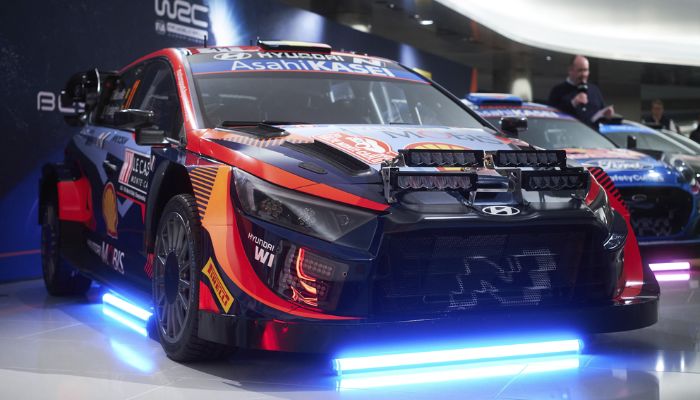
Rally cars have many special parts. Every component is built for performance and survival. Let's look at the core specifications that matter most. These include the engine, transmission, suspension, and brakes.
Rally Car Engine Specs: The Heart of the Machine
The engine is the most crucial part of any race car. In rally racing, the engine needs to be both powerful and reliable. Most top rally cars use a 1.6-liter turbocharged inline-four engine . This small engine produces massive power because of the turbocharger.
The rally car engine specs are impressive. For example, the Toyota GR Yaris Rally1 has a 1.6-liter engine. It produces over 500 PS when combined with the hybrid unit . That is a huge amount of power from a small engine.
Let’s break it down. In the Rally1 class, the combustion engine works with an electric motor. This gives an extra 100 kW of power . The engine alone produces about 380 horsepower. The hybrid system adds 134 horsepower. Together they are unstoppable.
Other classes have different engines. Rally2 cars use a 1.6-liter turbo engine with about 285 horsepower . They do not use hybrid power. Rally3 cars use a 1.5-liter engine with about 220 horsepower .
Rally Car Horsepower: Power Levels Explained by Class
Rally car horsepower varies greatly. It depends on the class of the car. The FIA divides rally cars into five main classes . The horsepower changes at each level.
Here is a simple breakdown of rally car horsepower by class:
- Rally1: Over 500 PS (engine and hybrid combined) .
- Rally2: Approximately 285 hp .
- Rally3: About 220 hp .
- Rally4: Around 180-200 hp .
- Rally5: About 150-160 hp .
The horsepower matters. But rally drivers care more about torque. Torque gives the car pulling power out of corners. Rally cars need high torque to accelerate on loose surfaces. This is why turbocharged engines are so popular. They provide lots of torque at low engine speeds.
Rally Car Top Speed: How Fast Do They Really Go?
Many people ask about rally car top speed. The answer is surprising. Rally cars are not the fastest cars on a straight road. They usually reach between 120 and 160 mph.
For instance, the top WRC Rally1 car has a top speed of around 201 kph . That is about 125 mph. Some older cars went faster. An ultra-rare Porsche rally car had a top speed of 159 mph .
However, top speed is not the main goal. Rally racing is about average speed. The fastest average speed in a WRC rally is about 78.7 mph . This record was set in Finland. The roads there are very fast.
Rally cars are built for acceleration and control. They need to grip the road. They need to turn quickly. A high top speed is less important than handling. The rally car specifications focus on reliability and durability over raw speed.
A Complete Breakdown of Rally Car Chassis and Suspension
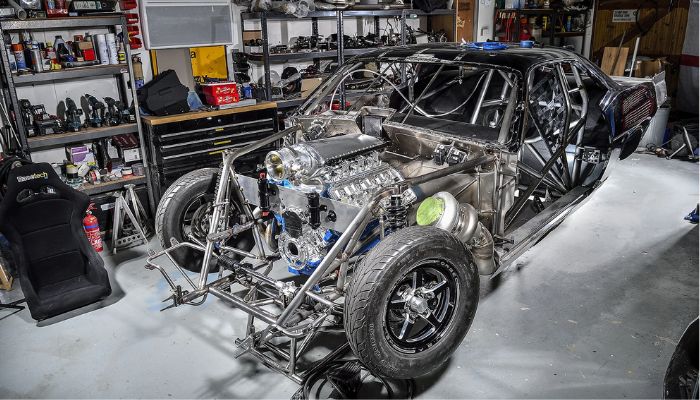
The chassis and suspension are key to a rally car's performance. These parts handle the rough terrain. They keep the car stable during jumps. They allow the car to grip the road on sharp turns.
Understanding the 2024 GR Yaris Rally1 Specifications
The Toyota GR Yaris Rally1 is a great example of modern engineering . Let’s look at its rally car specifications.
Engine and Hybrid System
This car uses a 1.6-liter inline-four turbo engine. It has direct injection. The hybrid system adds 100 kW of power . The combined power is over 500 PS . It generates over 500 Nm of torque . The engine displacement is 1,600 cc.
Transmission and Drivetrain
It uses a 5-speed mechanical shift gearbox . The car has four-wheel drive. It uses two mechanical differentials . The clutch is a double plate sintered type . This setup handles the massive torque well.
Suspension and Brakes
The suspension uses MacPherson struts at the front and rear . The damper travel is 270mm . That allows the car to absorb huge jumps. The steering is a hydraulic rack and pinion system . Brake sizes vary. The gravel brakes use 300 mm discs. The tarmac brakes use 370 mm discs . This shows how rally car specifications change based on the road.
Dimensions and Weight
The car is 4,225 mm long . It is 1,875 mm wide . The wheelbase is 2,630 mm . The minimum weight is 1,260 kg . It has a carbon-fiber body on a tubular frame .
The Differences in Rally2 and Rally3 Specifications
Rally2 cars are the backbone of the WRC. Many private drivers use them. They are cheaper than Rally1 cars. But they are still very fast.
The rally car specifications for Rally2 are strict . They use a 1.6-liter turbo engine. The power is regulated to about 285 hp . They have a five-speed sequential gearbox . They have permanent four-wheel drive. They weigh 1,230 kg minimum .
Rally3 cars are entry-level. They use a 1.5-liter engine. They have 235 hp . They are designed to be affordable. They help new drivers enter the sport. The rally car specifications for Rally3 are simpler than Rally2.
The History of Rally Car Specifications
Rally cars have changed a lot over time. In the 1960s, the Mini Cooper S was a winner. It had a 1,071 cc engine. It produced just 57 kW of power . It had a top speed of 160 km/h . It won the Monte Carlo Rally. This showed that small cars could win.
In the 1980s, cars got much faster. The Audi Quattro had up to 410 horsepower . The Lancia Rally had 310 horsepower . They used turbochargers. They had four-wheel drive. These were the glory days of Group B rally cars. Those cars were very powerful.
The modern era brought new rules. The FIA created the World Rally Car (WRC) rules. Now we have the Rally1 hybrid cars. The rally car specifications are always evolving. They now focus on safety and sustainability.
Comparing Rally Cars to Other Racing Cars
Rally cars are different from other race cars. Formula 1 cars have over 1,000 horsepower. They have a top speed over 200 mph. But they race on smooth tracks. Rally cars race on dirt and gravel. They need suspension that can handle big jumps.
A NASCAR car may go 188 mph average in a race . But a rally car focuses on handling. The fastest average speed in a WRC rally is only about 78 mph . This shows that rallying is not about pure speed. It is about driver skill and car control. The rally car specifications reflect this. They prioritize torque, grip, and durability.
The Importance of Fuel and Sustainability
Modern rally cars are going green. The Rally1 cars use a fossil-free fuel . This is a big step for the sport. The hybrid system also helps. It charges the battery during braking. It uses electric power for extra acceleration.
Toyota and other brands are working on making cars better for the environment . These changes are part of the future. The rally car specifications now include sustainable technology.
Expert Opinion on Rally Car Performance
Experts agree that the current cars are the most advanced ever. The addition of hybrid power has made them faster. The torque is incredible. But driving these cars is still very tough.
Experts also note that all-wheel drive is essential. It gives the driver maximum grip. The sequential gearbox allows for quick shifts. This keeps the car in the power band. A well-tuned suspension is also vital. It keeps the tires on the ground.
The rally car specifications show the balance between power and control. That is the secret to success in rally racing.
Rally Car Specifications—The Key Numbers
Here is a quick recap of the key numbers. The top Rally1 cars have over 500 horsepower. They have about 500 Nm of torque. They weigh just 1,260 kg. They can go over 120 mph. The brakes use 370 mm discs on tarmac . The suspension travel is 270mm . These numbers are impressive for a car that races on dirt.
Conclusion
The world of rally racing is full of exciting technology. Rally car specifications are designed for one purpose. That purpose is to win on the toughest roads on Earth. The cars are powerful. They have over 500 horsepower in the top class. They are fast, reaching over 120 mph. But they are also controlled. They use advanced suspension and all-wheel drive. These specifications make them special. They allow drivers to perform incredible feats.
The future is bright for rally cars. The sport is adopting hybrid power. It uses fossil-free fuel. The rally car specifications will continue to change. They will become even more advanced. But the core focus will stay the same. It will always be about performance, durability, and control. Whether you are a new fan or an expert, understanding these specs makes the sport more enjoyable. The power and precision of these machines are truly remarkable.
Frequently Asked Questions
What are the main classes of rally cars?
The FIA has five main classes. They are Rally1, Rally2, Rally3, Rally4, and Rally5 . Rally1 is the top class. Rally5 is the entry-level class. The rally car specifications define each class.
What engine is used in a WRC Rally1 car?
It uses a 1.6-liter turbocharged inline-four engine. It is paired with a hybrid electric motor . The total power is over 500 PS.
How fast is a rally car top speed?
The top Rally1 cars reach about 201 kph (125 mph) . However, average speeds are much lower. They are usually around 50 to 70 mph on winding roads .
What is rally car horsepower in Rally2?
Rally2 cars have about 285 horsepower . They do not use hybrid power.
Why is torque important in rally cars?
Torque provides pulling power. It helps the car accelerate out of corners. It is essential on loose surfaces like gravel and snow. The rally car specifications focus on high torque from low revs.