

If you’re serious about figuring out how to get into rally car racing, the path goes like this: driving licence first, then a rally school day on gravel, then a competition licence from your national motorsport body, then a used car in a beginner class, then a club event entry.
That’s the whole route. It’s not as expensive as people fear a first season with a budget car can cost less than a single track day weekend in circuit racing. Age doesn’t matter much either. People start at 18 and at 50. The sport is genuinely open to most adults who want to do it.
What Is Rally Car Racing: Why It’s Nothing Like What You’ve Seen on TV
Most people picture WRC highlight reels. Massive jumps, sideways through snowdrifts, Ogier inches from a cliff edge at 180 km/h. That’s real, but it’s also the absolute top of a sport that has dozens of levels underneath it. Entry-level club rally looks nothing like that. And that’s a good thing, because it means you can actually participate.
So, what is rally car racing at its core? Cars race one at a time against a clock, on closed public roads gravel tracks, forest lanes, farm roads. Not a circuit. Not a drag strip. Actual roads with actual trees and ditches right at the edge, temporarily closed and converted into a timed stage. Fastest total time across all the stages wins.
Two people in every car. Driver and co-driver. The co-driver reads handwritten pace notes out loud, warning the driver what’s coming the tightness of each corner, crests where the car goes airborne, junctions, rough patches. Without those notes, the driver is completely blind to what’s around the next bend. It’s genuinely one of the most interdependent partnerships in competitive sport.
You may also read :- Best Rally Cars In Lancia
Rally Car Racing: The Different Formats Worth Knowing
Rally isn’t one fixed format. Knowing the differences matters when you’re picking where to start:
- Stage rally: Timed sections on closed roads. One car at a time against the clock. Cumulative time across multiple stages determines the result. This is WRC, national championships, and most club events. What this guide is about.
- Regularity / navigation rally: No flat-out speed you try to arrive at checkpoints at exact pre-set times. Good for complete beginners learning navigation. Lower stress, lower cost.
- Rallycross: Short mixed-surface circuit, cars race door to door. Fast and exciting to watch, different skillset from stage rally, different car preparation.
- Cross-country: Multi-day navigation events Dakar is the extreme version. Endurance and navigation dominate. Nothing like stage rally.
How to Get Into Rally Car Racing The Sequence That Actually Works
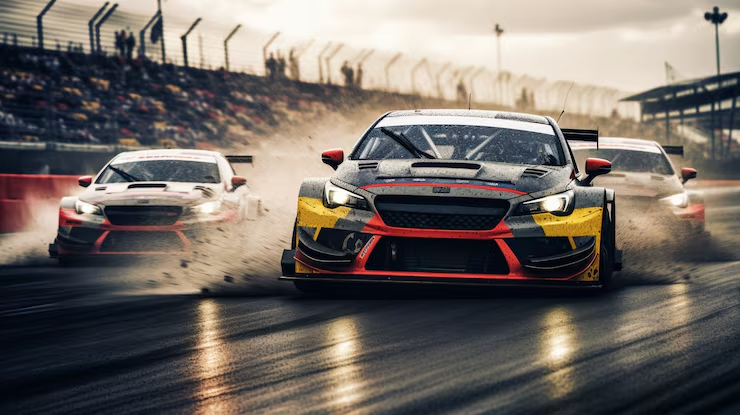
I’ve seen a lot of people approach how to get into rally car racing backwards. They spend six months reading forums, pricing up cars they can’t afford, watching YouTube build videos, and never actually doing anything. Then they give up. The correct order is almost the reverse of what most beginners do intuitively.
How to Get Into Rally Car Racing Five Steps in the Right Order
1. Driving licence before anything else
You’ll need a full road licence to get a motorsport licence. That’s obvious. Less obvious: actual road experience genuinely helps. People who’ve spent years driving on unsealed roads, in rain, in mud, start rally school with better instincts than someone whose whole experience is dry tarmac in good conditions. Road experience isn’t wasted time.
2. Rally school the only real starting point
A proper gravel rally school is where the sport actually starts to make sense. Not YouTube. Not books. The school. You need to physically feel what an oversteer slide feels like, what it takes to catch it, what left-foot braking does to the car’s balance on corner entry. None of that translates from reading.
Schools vary in length and price. A single day on gravel with instruction typically runs $300 to $1,500 depending on country and what’s included. Some schools finish with a timed run on a real stage. If yours offers that, take it the psychological shift from practice to timed running is something worth experiencing before a real event.
3. Competition licence simpler than it sounds
Every country with organised rally has a national motorsport authority. SCCA or NASA in the US. Motorsport UK in Britain. CAMS in Australia. FMSCI in India. They all issue entry-level competition licences usually called clubman or national C grade.
Requirements are minimal. Medical check, basic eyesight test, small annual fee, sometimes a short theory paper on regulations. None of them test your lap times or your car control. It’s an administrative step, not an audition.
4. The car class matters more than model
The single biggest budget mistake beginners make is buying the wrong class car. Not the wrong model the wrong class. A class with 20 competitors in your region is a completely different experience from a class with 4. More competitors means more used parts available, more mechanics who know the car, more people to ask for help, more competitive value from finishing. Find the most popular beginner class in your region first, then buy a car that fits it.
Common beginner class cars depending on country: Ford Fiesta, VW Polo, Peugeot 106, Honda Civic, Citroën Saxo. Usually 1.4 to 1.6 litre, standard or near-standard specification. Safety equipment roll cage, harness, fire suppression, approved helmet and suit adds cost on top of the car.
5. First event club level, no exceptions
Club events. Not a national round. Not even a regional championship opener if it attracts fast experienced competition. A genuine local club day where half the field are also doing their second or third rally ever. The stages are shorter, the organisation is more relaxed, and when you make a mistake and you will make mistakes you’re doing it in a lower-stakes environment. Fast comes later. Finishing comes first.
Stop waiting to feel ready. I’ve coached hundreds of first-time rally drivers and not one of them felt ready before their first stage. The learning only happens when you’re actually driving on the stage. Book the school, do the paperwork, enter the event. In that order. Kira Jansen, Rally Driver Development Coach and former National Champion, Netherlands
How to Start Rally Car Racing on a Budget That Doesn’t Break You
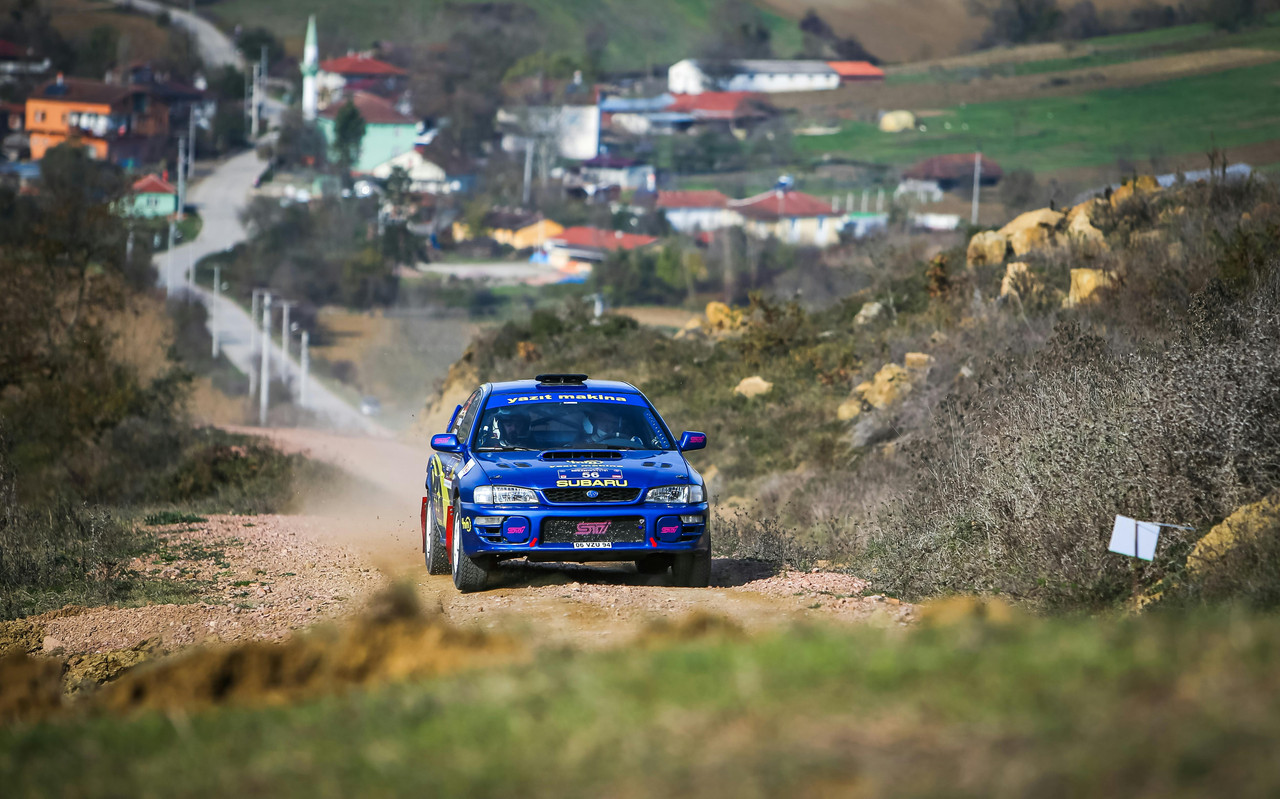
How to start rally car racing without spending a fortune is a real question with a real answer. The short version: class selection is everything, and co-driving is the cheapest entry point of all. The class selection point can’t be overstated.
Entry classes in national and regional rally championships exist precisely so people can run standard road cars with minimal preparation. A near-stock 1.4-litre hatchback in the right class competes on equal terms with identical or near-identical cars.
That’s very different from open-class events where a prepared Subaru Impreza will simply be faster than anything you build in your garage for $10,000.
How to Start Rally Car Racing Realistic First Season Budget
|
What You’re Paying For |
Rough Cost Range |
|
Used car, entry-level class |
$2,000 – $8,000 |
|
Roll cage (if not already fitted) |
$800 – $2,500 |
|
Harness and bucket seat |
$400 – $800 |
|
FIA-approved helmet |
$300 – $800 |
|
HANS device |
$200 – $500 |
|
Driver suit and gloves |
$200 – $600 |
|
Fire suppression system |
$300 – $600 |
|
Annual competition licence |
$50 – $200 |
|
Event entry fees (x4 events) |
$600 – $2,000 total |
|
Gravel tyres (per event, 2 sets) |
$300 – $700 per event |
Add it up and a realistic first season car, safety gear, licence, 4 club events, tyres lands somewhere between $8,000 and $18,000. That’s a wide range because it depends heavily on whether the car you find already has a cage fitted, how competitive the tyre regulations are in your class, and your country’s cost of living.
- For comparison: a season of club circuit racing in most countries costs more than that before you’ve turned a competitive lap. Rally looks expensive from the outside. It isn’t, relatively speaking.
- The cheapest entry: co-driving. Find a driver who needs a navigator. Buy your safety gear. Split or waive entry costs in exchange for your time and navigation. You’ll do real competitive stages in a real rally car without owning or maintaining anything. It’s how a lot of people discover whether they actually want to progress to driving.
Rally Car Racing Events: What Happens Before, During and After a Stage
Going to watch some rally car racing events as a spectator before you enter one is one of the most practically useful things you can do. Not for the inspiration though that’s real too but because the event format is genuinely confusing the first time you see it, and much less confusing if you’ve already watched it from the outside.
Rally Car Racing: Events Inside a Typical Stage Rally Weekend
- Scrutineering: Technical inspection before anything moves. Roll cage geometry, harness certification dates, fire system, helmet standard, suit rating all checked by officials against your class regulations. If something fails, you either fix it on the spot or you don’t start. No exceptions, no matter how far you’ve travelled.
- Recce: The day before stages, competitors drive the stage roads slowly in a standard road car windows open, pace note books out, co-driver writing down every corner, crest, jump, surface change. The recce is the co-driver’s primary job. Those notes become the script for the actual timed runs.
- Service park: Between stages the cars come back here. Tyres changed, damage assessed, adjustments made. At club level with a simple car, the ‘team’ is often just the driver, co-driver, and one friend with a socket set.
- Stage runs: Cars start at 1–3 minute intervals. One car moving at a time. When it’s your turn, the road is clear and the clock is running. Spectators watch from designated zones well clear of the road. The stage might last 4 minutes or 25 minutes depending on its length.
- Overall results: Cumulative stage times added together. Fastest total time wins. Fastest on one stage doesn’t mean much if you retire on another.
The atmosphere at club events is difficult to describe if you’ve only been to circuit racing. There’s no paddock fence keeping spectators away from cars and drivers. People wander through the service park. Competitors with years of experience chat to first-timers over a bonnet. Someone who just retired from the previous stage will tell you exactly what happened without being asked. It’s collaborative in a way circuit racing almost never is.
Walk the service park at a club rally before you enter one. Introduce yourself. Ask stupid questions. Nobody in that paddock was born knowing how this works. Every experienced competitor was a confused newcomer once and most of them remember it clearly. Marcus Obi, Former National Rally Competitor and Club Event Organiser, Nigeria
Skills That Actually Matter And the Ones That Don’t
There’s a version of this question that gets asked constantly in rally forums: do I need a motorsport background to start? The answer is no, and the follow-up question do I need natural talent? is also no, at club level. Rally driving at entry level is a teachable set of specific techniques.
Left-foot braking. The Scandinavian flick. Managing understeer vs oversteer on loose surface. Reading terrain. Every one of these is a learnable skill that responds to practice. What separates fast drivers from slow ones at entry level isn’t raw talent. It’s the number of kilometres they’ve driven on gravel with intent to improve.
- Loose surface car control: Feeling what the rear of the car is doing and responding without panic. Comes from gravel practice, not road driving.
- Co-driver communication: Listening to pace notes while driving, staying exactly one note ahead in your head, not rushing or falling behind. Strange skill. Takes time to sync with a specific co-driver.
- Mechanical sympathy: Not breaking things. Beginners push hard and hit rocks and bend steering arms. First goal of any rally is to finish. Fast is second.
- Patience under pressure: The winner of a club event is often not the fastest driver on any single stage it’s the most consistent driver who didn’t retire.
Age. People ask about age. Entry-level club rally is genuinely age-agnostic in a way that most competitive sports aren’t. The physical demands are high but specific neck strength, grip, concentration and none of them favour 22 over 45. People enter their first rally at 19. People enter their first rally at 58. Both are normal.
Finding Your Local Rally Community: Skip This and You’ll Learn Everything Twice as Slowly
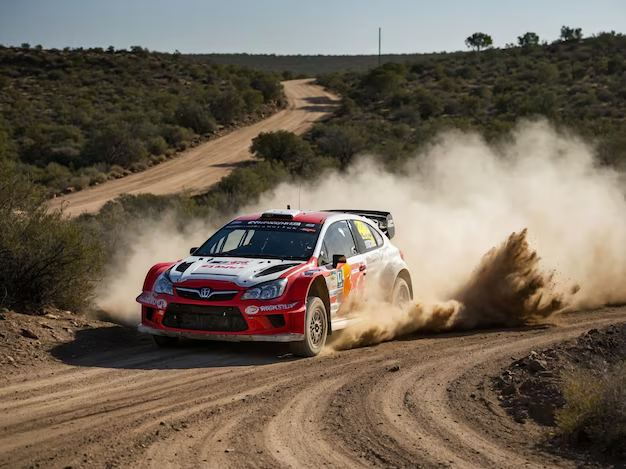
The single most practical step before spending any money: find an affiliated rally club in your area. Not a Facebook group. Not a subreddit. An actual club affiliated with your national motorsport authority, that organises or sanctions events and has members who compete in them.
These clubs run practice days on private land where you can drive before committing to a competition, while also sharing knowledge about which cars suit different classes. They can recommend trusted mechanics and help you avoid unreliable ones. Many members are looking for co-drivers or someone to assist with basic tasks like holding a spanner—opportunities that aren’t available to someone trying to enter rally as a solo project from their bedroom.
- United States: SCCA Rally, NASA Rally Sport. Clubs by region. Start at scca.com or nasaproracing.com.
- United Kingdom: Motorsport UK affiliated clubs. BTRDA is a good entry point. Most county areas have a club.
- Australia: Motorsport Australia (CAMS). State-based clubs. Find your state’s motor sport organisation.
- India: FMSCI affiliated clubs. Rally of Maharashtra and INRC feeder rounds for entry level.
- Everywhere else: Your country’s FIA affiliated national authority will list all clubs. Usually findable through fia.com.
Straight Answers to the Questions New Rally Drivers Actually Have
Q: How much does a first season of rally car racing actually cost?
A: The honest range is $8,000 to $18,000 USD for a first competitive season with your own car. That covers a used entry-class car, mandatory safety equipment, annual competition licence, 4 to 5 club event entries, and tyres. Higher in some countries, lower in others. If that number stops you: start by co-driving. You need safety gear and event entry fees, not a car. It’s a real foot in the door.
Q: Do I need any motorsport experience before my first rally?
A: No. Rally school plus competition licence is the standard beginner path and it assumes no prior motorsport background. Circuit racing experience doesn’t hurt but it doesn’t transfer directly either the car dynamics on loose surfaces are genuinely different and the co-driver element has no equivalent in circuit racing. You’re starting something new regardless of your track record.
Q: What’s the minimum age for a rally competition licence?
A: Depends on the country and sanctioning body. Most set the minimum at 16 to 18 for a standard competition licence. Junior programmes exist in some countries for younger drivers in restricted-power cars. Check your national authority directly: SCCA or NASA in the US, Motorsport UK in Britain, Motorsport Australia, FMSCI in India.
Q: Is co-driving a real way to start rally or just a fallback?
A: It’s legitimate, not a fallback. As co-driver you read pace notes from the passenger seat and navigate. You experience real competitive stages, understand event format from the inside, watch how experienced drivers approach corners, and build the community connections that make everything else easier. A meaningful number of competitive rally drivers started as co-drivers and crossed over to driving later. It’s a different but parallel career path in the sport.
Q: Which car should I buy for entry-level rally?
A: Find out which class has the most cars competing in your region, then buy a car from that class. This matters more than the specific model. A popular class has secondhand parts pools, mechanics who know the cars, and enough competitors to make finishing meaningful. Regionally common options include Ford Fiesta, VW Polo, Peugeot 106, Honda Civic but your local club will give you better advice than any general list.
Where This Actually Starts
No part of how to get into rally car racing is as complicated as it looks from the outside. The path is short and the steps are clear. Rally school. Competition licence. Right-class car. Club event. In that order, and not the other way around.
Understanding what is rally car racing properly the clock, not wheel-to-wheel combat; the closed-road stages; the co-driver who makes the driver’s speed possible changes how you approach the whole thing. Watching rally car racing events live, especially at club level, before you enter anything is time you won’t regret spending.
If budget is the blocker, how to start rally car racing as a co-driver first removes the car cost entirely. You’ll do real stages, meet real competitors, and find out whether this sport is actually for you before you’ve spent anything significant. The sport is more accessible than almost any other form of motorsport.
The community at club level is unusually open to people who show up and make an effort. The only step that costs you nothing and produces the most information is walking into a club event as a spectator and talking to the people there. Start there.