
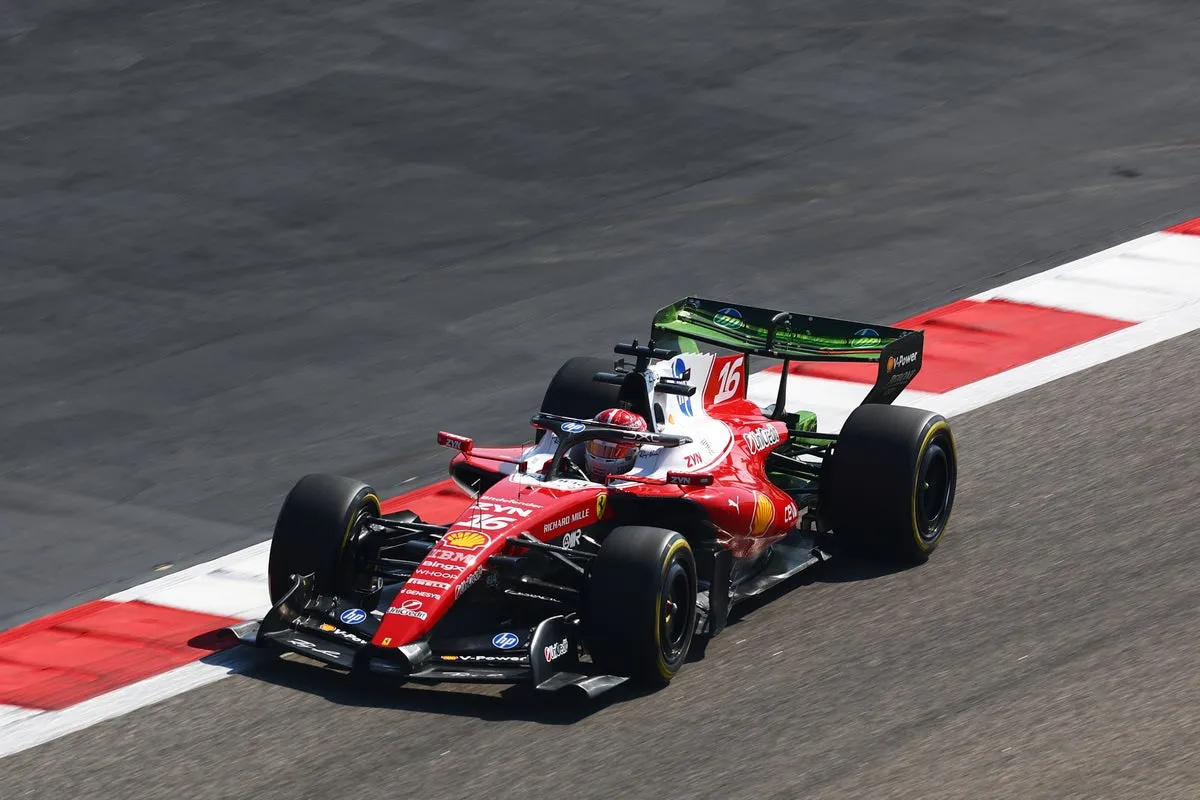
The F1 2026 active aero rules use moving wings to make cars faster and better at passing. Drivers switch between Z-mode for grip in corners and X-mode for speed on straights. This replaces the old DRS with a system that manages energy and helps cars follow each other closely.
My Expert Guide to the F1 2026 Active Aero Rules
I have had a lifetime of data and drama analysis of Formula 1 and I can say that the F1 active aero rule are a complete game-changer. This is the first time the car itself transforms into a living machine as it changes its shape during the racing in my experience when the sport is changing to V10 screamers to a hybrid power.
I recall a time when these rule began to take shape in the paddock when I was standing there. The engineers were concerned that it would not pass due to dirty air. The answer to my problem is these new F1 active aero rules. Being an individual that has already studied all the technical eras, I would not consider these rules other than the final challenge to the brain of a driver and the technical ability of a team.
F1 2026 Active Aero Rules Explained for Everyone
In order to grasp the F1 2026 rules of active aero, imagine an airplane with a paper. When the wings are folded in a certain way, it will remain longer in the air. Bend them in a different direction and it speeds in a straight line. This is done by the new F1 cars through electronics.
The F1 active aero rule described essentially disintegrate to two fundamental shapes:
- Z-Mode (The Corner King): It is the high force mode. The rear and front wings unfold their flaps. This picks up the wind and forces the car into the track. It feels like there are huge invisible hands who have the car clutched to the road when it is going at fast speeds.
- X-Mode (The Straight-Line Bullet): It is the low-drag mode. The front and rear wings have flaps that are flattened. This causes the car to be slippery thus cutting through the air with a lot less effort. That is how the cars will strike enormous top speeds over the long straights.
Why the New F1 rule 2026 Engine Needs This
Why did we change the wings, you may ask? The solution can be seen in the new F1 2026 engine rule. These new units of power are crazy. They are divided equally 50/50 to gas power and electric power.
Due to such high use of battery power in the cars they must be highly efficient. In the case it was always in the grip mode, the battery would run out too soon due to the wind resistance (drag). It is in fact my analysis of the technical information that the F1 2026 aero rules are a method of saving battery energy. When the straights are entered in X-mode, less energy is consumed by the car to attain the highest speed.
You may also read :- Best F1 Races of All Time: The Greatest Grands Prix in History
Goodbye, DRS. Hello Smart Racing,
We have been on a system known as DRS (Drag Reduction System) over the last fifteen years. But that did not push the rear wing. F1 active aero rule are a lot smarter. At this point, the front and back wings move when they are united.
In the olden days, DRS could only be used by the car behind. X-mode on the straights can now be used by each and every car! This makes the racing fair and yet fast. The FIA also included a Manual Override or Overtake Mode to assist in passing. This provides the car behind with special type of electrical punch to enable them keep up with their opponent.
The 2026 cars will be lighter and more powerful than ever and more focused on the driver skill. Nikolas Tombazis, Single Seater Director FIA.
Detailed Comparison: 2025 vs. F1 2026 Aero Rules
I compiled this table to demonstrate to you the extent of change. The differences are huge!
| Feature | Old Rules (2022-2025) | New 2026 Rules |
| Rear Wing | One flap moves (DRS) | Three elements move (active). |
| Front Wing | Static (Stayed still) | Two-element active flap |
| Car Weight | 798 kg (Heavier) | 768 kg (Lighter) |
| Wheelbase | 3600 mm (Longer) | 3400 mm (Shorter) |
| Power Source | Mostly Gasoline | 50% Gas / 50% Electric |
| Chassis Width | 2000 mm | 1900 mm |
How Drivers Master the F1 Active Aero Rules
Suppose that I was the driver in the cockpit. I am approaching 180 mph to a narrow turn. I am in Z-mode in my car which means that I have maximum grip. I sense the steering wheel weighing me down through the wings pushing me to the ground. I am able to overtake the corner at a much higher speed than a conventional car.
I press a button as quickly as I straighten the wheel. My wing flaps can recline using the F1 active aero rules. I am now in X-mode. The drag is reduced by 55 percent, and I experience the rocket-like acceleration of the car. My task is to make these switches just timely. I may spin out in case I go into X-mode too early in a corner!
Expert Opinions on the New Technical Era
I have been paying close attention to an iconic designer Adrian Newey. He is the one who made the fastest cars on behalf of Red Bull. Initially, he was concerned that the rules were complex. Nevertheless, he has since indicated that the F1 aero rule pose an interesting test to aero.
That, according to other professionals, will be the teams that are best able to handle their battery recharging. Since you consume a lot of electricity, you have to have time to harvests of energy. This is facilitated by the active aero which makes the car easier to press through the air when you are not on full throttle.
When is the next F1 regulation change after 2026?
The most frequent question that I get is: What is the next F1 regulation change in 2026? According to the way F1 operates, we tend to retain the same large rules over 5 years. This is the next big change that is unlikely to occur until 2031.
The FIA would also prefer the teams to get time to master the active aero rules of F1 2026. This provides smaller teams with an opportunity to make up. By varying the rules year by year only the wealthiest teams would be able to keep pace. It is during this period of stability that we can find the nearest racing in history.
A Nimbler, Faster Racing Machine
The 2026 cars will not only be smart, but they will also be smaller. I call them "nimble cars."
- Narrower Body: The vehicle is 10 cm skinnier, and this provides more space on the road to do two-wide racing.
- Smaller tires: The front tires are 25mm thinnner and the rears are 30mm thinnner. This increases the turnability of the car.
- Less Weight: Slimming 30 kg is like having removed a huge dog out of the automobile. It responsifies the car to the inputs of the driver in a great way.
- Sustainability: It will use only 100 percent sustainable fuel with the cars. This implies that F1 is saving the planet and at the same time making it the fastest sport on the planet.
Managing the Manual Override and Boost
The new system of boost is one of the most interesting aspects of F1 2026 active aero rule. Previously, the car drivers were equipped with a battery button, albeit not that strong. Now, when you are within one second of the car ahead of you you receive an additional 0.5 megajoules of energy.
This is referred to as Manual Override Mode. As the power of the leading car begins to taper off (reduced power) at high speeds the car behind it has the opportunity to continue with its full power longer. This brings a slingshot effect which makes it far more enjoyable to pass without making it artificial as the old DRS used to do at times.
The Secret Strategy of Energy Harvesting
In my study life on race strategy, I have come to know that not all cars with the greatest power are the fastest but the car that applies its power wisely. Under the an active aero rules F1 2026, drivers need to consider recharging.
They can re-charge the battery through:
- Braking: Changing the heat of the brakes into electricity.
- Lifting: Early removal of the foot off the gas before a turn.
- Super-Clipping: The engine is used to charge the battery even when accelerating on a straight.
These are facilitated by the active aero modes. When in X-mode, the drag of the car is lower and therefore the engine does not need to work very hard in order to keep the car moving. The result of this saved work is something that may be converted to additional battery power in the future!
Frequently Asked Questions About F1 2026
Q. What is the working of F1 active aero rules among all the drivers?
A. X-mode (low drag) and Z-mode (high grip) are available to every driver. As opposed to the outdated DRS, it does not require that you be in the back of another car to use it. You may apply it to each and every lap to make your car more efficient.
Q. Will the F1 aero rule make the cars slower in bends?
A. Yes, a little bit. The cars will not be as 30% glued to the track in very fast corners since the cars have 30 percent less downforce. They will however be much quicker through the straights hence the lap times will be very fast.
Q. Are there chances that the wings will fail?
A. There are very strict rules of safety under the FIA. Its danger is that it may be hazardous in case a wing gets trapped in the open (X-mode) position. This is the reason why there are fail-safe mechanisms which make the wings to go back to the high-grip Z-mode in case something goes wrong.
Q. But what becomes of the front wing in 2026?
A. The front wing is active also! It has two moving flaps. The reason why this matters is that in case the rear wing was the only part moving the car would be considered unbalanced and extremely difficult to turn. The car is stable when the two wings are moved.
Q. Are these the most complicated rules of all?
A. In my opinion, yes. These are the most technical cars in the history of mankind due to the combination of the active aero rules and the new 50/50 electric engine. It is the fulfillment of a technology-adoring fans.
Final Thoughts on the Future of F1
It does not take me more than days before I reach the first race of 2026. The sight of twenty cars moving with their wings simultaneously is going to be worth watching. These F1 2026 active aero rule represent a radical innovation. They confirm that Formula 1 is the master of innovation. The motorists will be forced to be wiser, the designers will be compelled to be more innovative and we as spectators get to see the most sophisticated racing of all times. It’s going to be a wild ride!
Would you have me develop a breakdown of the way the new sustainable fuels will alter the sound of the engine?