
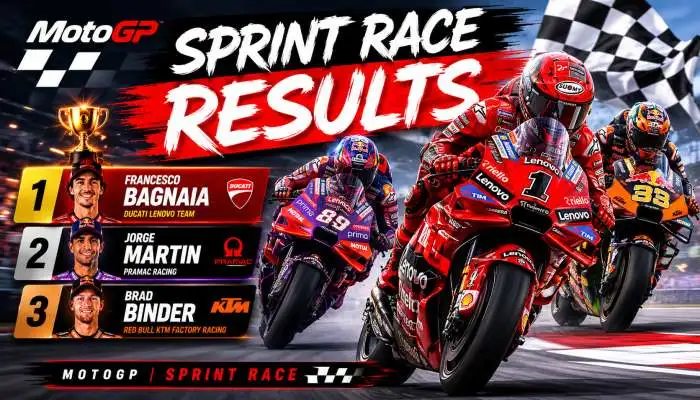
If you are hunting down the latest MotoGP sprint race results, you are looking at a completely transformed landscape of motorcycle racing. Since their implementation, these half-distance Saturday dashes have rewritten the premier class playbook. They didn't just add a session; they built an entirely different sport within a sport.
Every single Saturday, riders line up to face what can only be described as a controlled, 20-minute explosion of mechanical aggression. No tire management. No fuel-saving mapping strategies. Just pure, unadulterated maximum attack. Below, we break down how the modern MotoGP Sprint race time slot dictating Saturdays impacts the wider championship standings, how MotoGP qualifying results seal or destroy your weekend, and what actually goes down under the carbon-fiber fairings when the lights go out.
Key Takeaways
- The Format: Sprints run exactly 50% of the standard Sunday race distance.
- The Points Engine: Only the top nine finishers score points, scaling from 12 down to 1.
- The Qualifying Connection: Saturday morning's MotoGP qualifying results dictate grid slots for both the Sprint and the main Grand Prix.
- The Impact: Championships are no longer won solely on Sundays. Saturday execution separates the contenders from the pure historical footnotes.
You may also read :- MotoGP Qualifying Rules Explained: Q1, Q2 and Starting Grid Guide
The Realities of the Saturday Dash: Who Won the MotoGP Sprint?
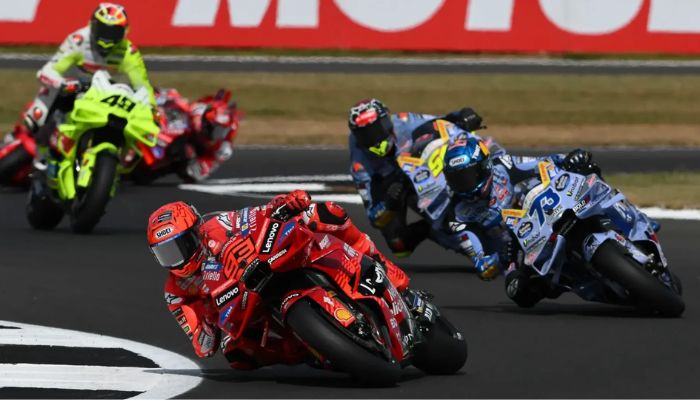
Whenever fans search for who won the MotoGP Sprint, they are typically looking at a story of absolute risk tolerance. Unlike Sundays, where a rider can spend ten laps evaluating a rival's rear tire wear or engine mapping quirks, the Sprint requires instant commitment.
Take the recent drama at the Catalan Grand Prix as a prime example. Looking directly at the Motogp sprint race results, it was Alex Marquez who secured a stunning victory, but the real story was the chaos behind him.
2026 Catalan Grand Prix Sprint Top Results:
1. Alex Marquez (Gresini Racing)
2. Pedro Acosta (GasGas Tech3)
3. Fabio Di Giannantonio (VR46 Racing)
The Real-World Scenario
During that very weekend in Barcelona, championship front-runners Marco Bezzecchi and Jorge Martin faced completely opposite disasters. Martin crashed out entirely, while Bezzecchi crawled home in a subpar 9th position. Because the Sprint is over in less than 25 minutes, one single defensive error or minor loss of front-end feel at Turn 1 drops you completely out of the points.
The Hot Take
The Sprint has actively ruined the psychological art of race-craft. Historically, riders like Valentino Rossi or Marc Marquez would mentally dismantle an opponent over 30 laps. The Sprint eliminates this entirely. It doesn't reward the smartest racer; it rewards the rider most willing to risk an catastrophic front-end wash-out in the first three corners. It is an engineering nightmare disguised as entertainment.
Under the Hood: The Mechanical Reality
To handle the shortened duration, teams modify the bikes significantly compared to Sunday:
- Fuel Allocation: Exactly 12 liters of fuel are permitted for the Sprint, reducing overall bike weight by several kilograms compared to the 22-liter Sunday tank. This alters the center of gravity and changes how the bike handles direction changes.
- Tire Compounds: Riders almost universally select the softest available rear slick option. They don't need to prevent the tire from tearing itself to shreds over 110 kilometers; they just need it to survive 50 kilometers of intense thermal load.
Pro-Tip #1 (0–500 Words): When betting on or analyzing MotoGP qualifying results, look at sector three and four sector times in Free Practice 2. Riders who show a sudden burst of speed on cold tires are highly likely to weaponize the extra grip of the soft rear compound during Saturday's short race format.
How MotoGP Qualifying Results Dictate Saturdays?
You cannot talk about the MotoGP sprint race results without analyzing the qualifying structure that takes place just hours prior. The implementation of the intense Qualifying 1 (Q1) and Qualifying 2 (Q2) format creates immense pressure on Saturday mornings.
+-------------------------------------------------------------+
|               SATURDAY MORNING SCHEDULE MATRIX              |
+------------------------------+------------------------------+
|   Free Practice 2 (30 Mins)  | Fine-tuning race pace maps.  |
+------------------------------+------------------------------+
|   Qualifying 1 (15 Mins)     | Top 2 advance to Q2 shootout |
+------------------------------+------------------------------+
|   Qualifying 2 (15 Mins)     | Decides Rows 1-4 on the grid |
+------------------------------+------------------------------+
The Real-World Scenario
Look at Fabio Di Giannantonio’s trajectory. By his own admission, failing to hook up a perfect lap in Q2 compromised his entire weekend. Starting from the second or third row means you inherit the chaotic "dirty air" and thermal turbulence generated by the wings and aerodynamic fairings of the bikes ahead. If you don't qualify in the top four, your chances of hunting down who won the MotoGP Sprint drop exponentially.
The Hot Take
A qualifying position matters far too much now. The current reliance on heavy downforce aerodynamics means passing another 300-horsepower motorcycle is bordering on the impossible without a massive performance deficit. Qualifying isn't just about speed anymore; it’s an insurance policy against getting your front tire cooked by the exhaust wake of the bike in front of you.
Under the Hood: Aero and Tire Pressure Physics
When a modern bike sits in the slipstream of another during a sprint, its front tire pressure spikes rapidly due to the lack of clean, cooling airflow. Regulations mandate strict minimum tire pressures. If a rider qualifies poorly and gets stuck in a pack:
- The front tire temperature crosses the optimal thermal threshold.
- The pressure climbs past the safe operating limit ($>1.88 \text{ bar}$).
- The front footprint shrinks, causing the bike to understeer constantly.
The Clock is Ticking: Analyzing the MotoGP Sprint Race Time
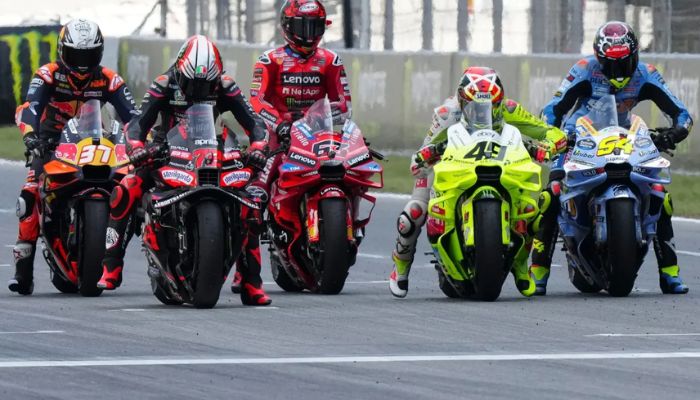
The MotoGP Sprint race time block usually lands precisely at 15:00 local track time on Saturdays. This specific window isn't just a marketing choice; it presents a severe engineering hurdle for crew chiefs and tire technicians alike.
The Real-World Scenario
At tracks like Circuit de Barcelona-Catalunya or Jerez, the track surface temperature changes drastically between the morning practice sessions and the mid-afternoon sprint. A track that was a comfortable $28^\circ\text{C}$ at 10:00 AM can easily morph into a greasy, $45^\circ\text{C}$ skating rink by mid-afternoon. Riders who dominated the morning charts frequently find themselves completely lost when the race starts.
The Hot Take
The scheduling of the sprint race is intentionally designed to trigger mechanical failures and rider errors. By forcing teams to race when track grip is at its lowest point of the day, organizers ensure high-drama television at the direct expense of rider safety and predictable setups.
Under the Hood: Track Temperature Math
As asphalt absorbs infrared radiation, its macro-texture changes. The rubber deposited during Moto3 and Moto2 sessions reacts differently to the heat. Teams must adjust their suspension linkage geometry to compensate:
They alter the mechanical trail of the front fork by fractions of a millimeter just to give the rider enough feedback to avoid losing the front end under heavy braking.
Pro-Tip #2 (500–1000 Words): Always cross-reference ambient humidity with the afternoon motogp sprint race results. Higher humidity levels reduce air density, directly lowering the aerodynamic downforce generated by the winglets and causing unexpected wheelies over crests.
The Anatomy of a Sprint Champion: Driving Style Evolutions
To consistently top the sheet of MotoGP sprint race results, a rider must unlearn years of classic Grand Prix training. The smooth, flowing lines of the 800cc and 990cc eras are officially dead. The modern sprint requires a brutal, physical riding style focused on corner entry violence.
       [TRADITIONAL STYLE]                     [MODERN SPRINT STYLE]
     Smooth arc entry line                 Geometric V-shape trajectory
               │                                         │
     High mid-corner speed                     Hard trail-braking to apex
               │                                         │
    Progressive throttle pick-up          Point-and-shoot electronic launch
The Real-World Scenario
Jorge Martin’s rise to prominence as a Saturday specialist is no fluke. His style uses extreme body displacement, hanging completely off the inside of the bike to keep the machine upright. This allows him to utilize the wider, meatier part of the tire tread, gaining traction fractions of a second earlier than riders utilizing more conventional body geometry.
The Hot Take
The "beautiful" art of smooth motorcycle riding is dead. The Sprint rewards ugly, angular, and highly dangerous inputs. It has turned premier-class racers into drag racers who happen to have to stop and turn the bike on a dime halfway through the straightaway.
Under the Hood: Ride Height Devices
The modern bike utilizes hydraulic ride height devices (both front and rear) to lower the center of gravity out of corners. During a Sprint:
- Riders engage these systems up to six times per lap.
- Lowering the rear by 30mm alters the anti-squat geometry of the swingarm.
- This transfers load directly to the rear tire structure, turning chemical grip into mechanical forward drive instantly.
The Financial and Physical Toll of the 24-Minute War
With points scaling down from 12 for the winner down to 1 for ninth place, the championship cost of an empty Saturday is devastating. It alters how factories invest their developmental capital.
The Real-World Scenario
Consider the high attrition rate at turn one in Barcelona. When Brad Binder and Joan Mir were taken out in a multi-bike collision triggered by midfield congestion, they didn't just lose immediate points. They lost raw components. Carbon fiber fairings, aluminum swingarms, and bespoke electronics packages were reduced to scrap metal within three seconds of the green flag.
The Hot Take
The sprint format is economically unsustainable for satellite-independent teams. While factory outfits can easily absorb the financial hit of multiple Saturday write-offs, smaller teams are forced to compromise their development paths just to keep an adequate supply of spare parts in the freight boxes.
Under the Hood: Materials Fatigue
A bike ridden at 100% capacity for a short sprint experiences severe thermal stress cycles. The engine telemetry reveals that water temperatures spike far higher in the dirty air of a sprint pack than during a lonely solo run on Sunday. Titanium valves and carbon-matrix brake discs are subjected to rapid heat cycles that accelerate component retirement schedules by up to 30%.
Pro-Tip #3 (1000–1500 Words): Look at engine allocations across the season. Teams that push aggressively during Saturday's MotoGP Sprint race time often face severe engine mileage restrictions by the final three flyaway rounds of the year, forcing them to turn down maximum RPM limits to avoid pitlane start penalties.
The Psychological Fractures: Saturdays vs. Sundays
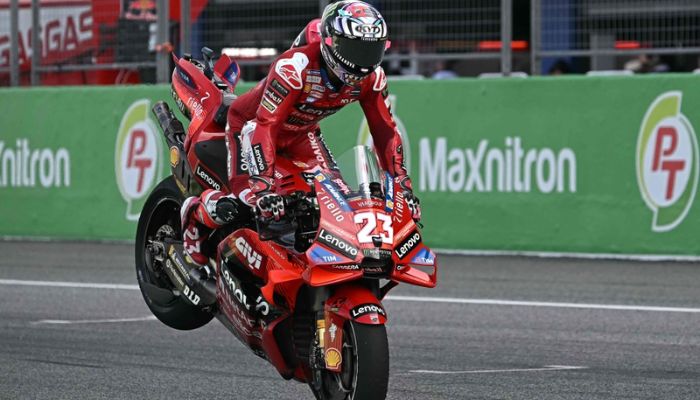
The psychological shift required to process who won the MotoGP Sprint and then reset for Sunday is a mental hurdle that breaks many athletes. You are essentially asking an individual to deploy two entirely separate personalities within a 24-hour window.
The Real-World Scenario
Riders frequently speak about the mental whiplash of celebrating a podium finish on Saturday afternoon, only to realize they have to do twice the distance under completely different track grip conditions the next morning. If a rider lets the adrenaline of a positive Saturday performance warp their Sunday strategy, they almost always pay for it with an early trip to the gravel trap.
The Hot Take
The Sprint has turned the paddock into an environment devoid of strategic nuance. It has induced a state of chronic fatigue among the riders, leading directly to the erratic over-braking maneuvers and subsequent multi-rider accidents that have come to define the modern opening lap.
Under the Hood: Telemetry Discrepancies
When engineers compare data maps from Saturday afternoon to Sunday midday, the differences are stark:
- Throttle Application Trace: Saturday's trace shows vertical, abrupt inputs.
- Lean Angle Over Time: Sprints feature shorter duration at maximum lean angle as riders try to pick the bike up early to maximize the engine's traction control limits.
The Global Impact on Title Chases
Ultimately, the accumulation of points from Saturday afternoon shifts the tectonic plates of the world championship standings. You can no longer build a title campaign around safe, consistent Sunday podiums.
If a rider completely ignores the sprint matrix, they leave up to 12 points on the table every single weekend. Over a multi-round calendar, that represents an insurmountable math deficit. It forces every factory to build a bike that works instantly, bypassing long-term mechanical stability in favor of explosive short-term performance windows.
FAQ
What is the difference between a MotoGP Sprint and the Sunday Grand Prix?
The Sprint covers exactly half the distance of Sunday’s main race. It offers roughly half the championship points (12 down to 1 for the top nine finishers) and allows teams to run light fuel loads (12-liter cap) without any real need for tire degradation management.
How do MotoGP qualifying results affect the Sprint grid?
Saturday morning's Q1 and Q2 qualifying sessions determine the starting grid for both the Saturday Sprint and the Sunday Grand Prix. A poor qualifying performance compromises your track position for the entire weekend.
What is the standard MotoGP Sprint race time schedule?
The sprint typically starts at 15:00 local track time on Saturday afternoon. It takes place directly after the morning practice and qualifying sessions have concluded.
Who won the MotoGP Sprint at the latest round?
Winners fluctuate wildly due to the short, intense nature of the format. Recent rounds have seen chaotic battles with riders like Alex Marquez, Jorge Martin, and Pedro Acosta maximizing the low-fuel setup to secure hard-fought victories.
Do sprint race statistics count as official Grand Prix victories?
No. Historically and statistically, historical record books classify Sprint wins under a separate category. A victory on Saturday does not add to a rider’s official premier-class Grand Prix win tally, though it carries substantial weight in the official championship standings.