
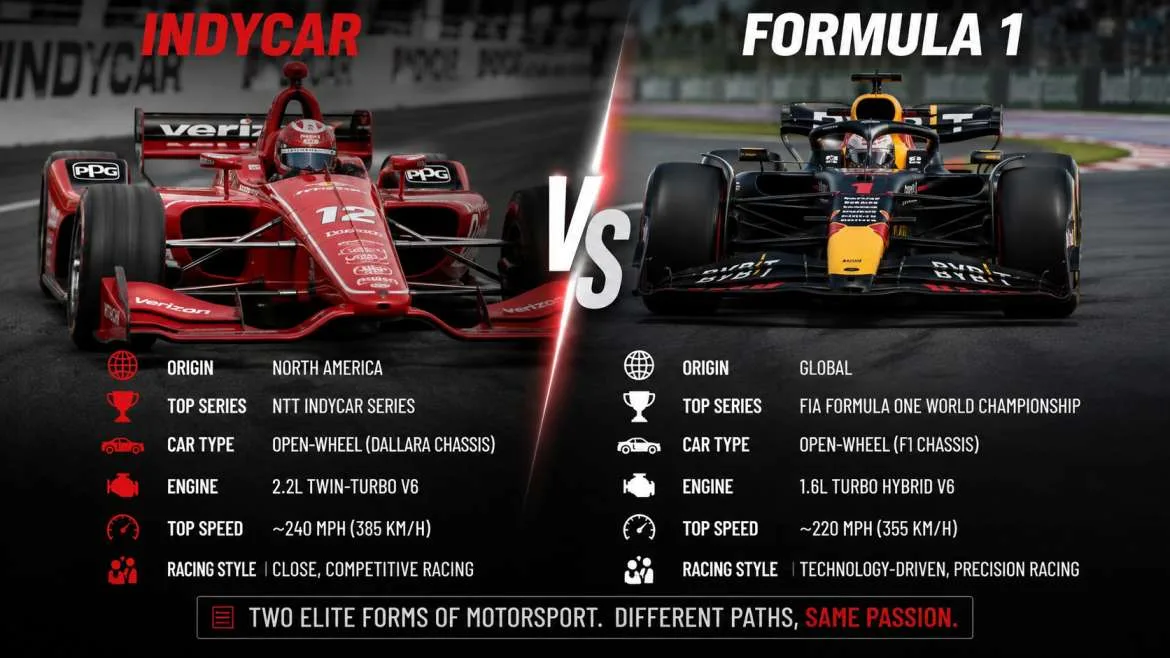
When race fans sit down to compare IndyCar and Formula 1, they mostly want one clear answer. Which one is truly the better series? Formula 1 cars are like science projects on wheels. They have over 1000 horsepower and so much downforce that they can drive upside down in a tunnel. IndyCars are not that fancy. They are simpler machines. But they hit higher top speeds. On oval tracks, they go past 240 miles per hour.
The main difference is what each series cares about. Formula 1 puts all its money into technology. The cars turn corners at crazy speeds. Every part of the car is built for precision. IndyCar cares more about the racing itself. The cars are closer in performance. This means more fights on the track. The ovals add a whole different feel.
So which one should you pick? That depends on what gets your heart racing. If you like perfect technique and engineering brilliance, F1 is your answer. If you like door-to-door battles and raw speed, IndyCar will not disappoint you.
Understanding the IndyCar vs Formula 1 Comparison
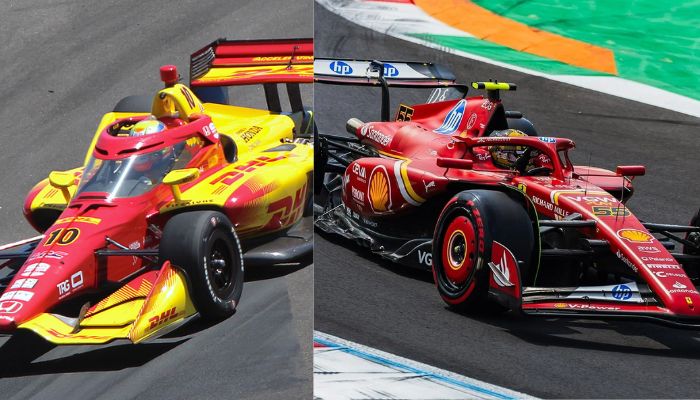
The indycar vs formula 1 comparison shows two different racing worlds. Both have single-seat open-wheel cars that look similar to casual fans . But the machines, rules, and racing styles are very different. Let's look at what makes each series special.
Different Racing Philosophies
Formula 1 is the world's most prestigious racing series. It is the pinnacle of racing technology . F1 teams build their own cars. They spend hundreds of millions to gain an edge. Innovation is the name of the game.
IndyCar takes a different path. The American series focuses on close competition. All teams use the same chassis. They also have two engine choices. This keeps costs down and puts the focus on driver skill . The indycar vs formula 1 comparison shows F1 is about engineering, while IndyCar is about racing.
You may also read :- IndyCar Championship 2025: Top Drivers, Teams & Predictions
Cost Comparison Between the Two Series
Money is a big part of the indycar vs formula 1 comparison. An IndyCar team can operate on about $10 million per year . A competitive F1 team needs over $145 million! The FIA uses a budget cap. But top teams still spend huge amounts of money . An IndyCar chassis costs around $349,000. An F1 car can cost $14 to $20 million just for one car . This shows why IndyCar is more accessible for new teams and drivers.
Engines and Power Output
The indycar vs formula 1 comparison continues with engines. F1 uses a 1.6-liter V6 turbo hybrid. It produces about 1000 horsepower . The engine is very complex. It uses two energy recovery systems called MGU-H and MGU-K . These systems capture heat and kinetic energy.
IndyCar uses a 2.2-liter V6 twin-turbo engine. It makes around 750 horsepower from the combustion engine. The new hybrid system adds about 60 more horsepower . IndyCar also has a "push to pass" button that gives drivers a temporary boost. This adds about 50 horsepower . While F1 has more total power, IndyCars are no slouches. IndyCar engines are also much cheaper. They cost about $167 per horsepower. F1 engines cost about $11,000 per horsepower !
Speed and Performance in the IndyCar vs Formula 1 Comparison
Speed is the heart of the indycar vs formula 1 comparison. Which car is faster? The answer depends on what kind of speed you are talking about.
Top Speeds: Straight-Line Speed and Acceleration
IndyCars are faster in a straight line. They can hit 240 mph on oval tracks like Indianapolis . This is the highest top speed in open-wheel racing. The fastest F1 race speed is 231 mph. This record was set by Valtteri Bottas in Mexico . F1 cars focus more on cornering grip and downforce. IndyCars are set up for lower drag on ovals. This allows them to reach higher speeds .
Lap Times: Circuit of the Americas Example
F1 cars are much faster around a traditional road course. We have a perfect example at Circuit of the Americas (COTA). Both series have raced there. The F1 pole lap in 2019 was 1 minute 32 seconds . The IndyCar pole lap that same year was 1 minute 46 seconds . That is a 14-second difference! This is the clearest part of the indycar vs formula 1 comparison. F1 cars have incredible downforce and grip. This allows them to corner much faster. Their superior acceleration also helps.
Who Wins: The Quick Summary
So, which is quicker? It depends on the track. On oval tracks, IndyCar is king. On road and street courses, F1 is the clear winner. F1 cars are faster over a full lap on most circuits. Their massive downforce allows them to take corners at much higher speeds. A direct indycar vs formula 1 comparison shows F1 is usually the fastest .
The Cars: Technology and Engineering
The indycar vs formula 1 comparison shows huge differences in car design. One series pushes technology to the limit. The other uses proven, affordable parts.
F1 Cars: The Pinnacle of Technology
F1 cars are the most advanced race cars on the planet. Each team designs its own chassis, aerodynamics, and suspension . This leads to a lot of variety. F1 cars use complex hybrid engines. They also use lightweight materials like carbon fiber. The cars weigh around 798 kg . F1 technology often makes its way into road cars. The energy recovery systems in F1 are very advanced .
IndyCars: Simplicity and Standardization
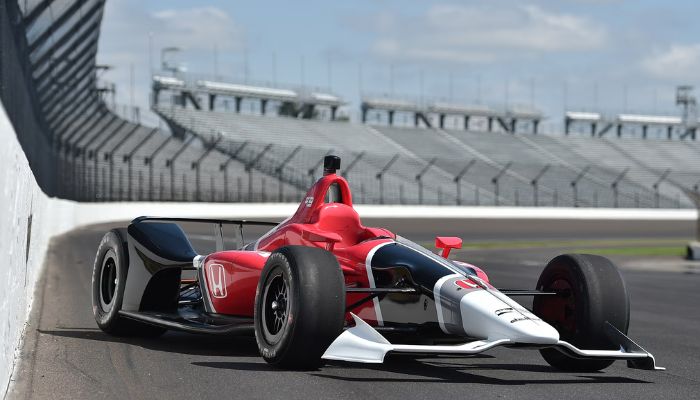
IndyCars use a spec chassis. This means all cars have the same chassis from Dallara . They also have the same aero kits. This reduces costs. It also means engineering differences between teams are small. The focus is on driver talent and strategy. IndyCars weigh between 748-766 kg . This is lighter than F1 cars. But they have less downforce. They also have no power steering . This makes them physically demanding to drive.
The Cost of Speed
The indycar vs formula 1 comparison also involves cost. The price difference is huge. A full IndyCar engine lease costs about $125,000 . This is a fraction of F1 engine costs. F1 engines are among the most expensive parts in racing. They cost millions to develop. This affordability makes IndyCar more accessible. It allows more drivers and teams to compete at the top level.
Racing Rules and Culture
The indycar vs formula 1 comparison also involves rules and culture. These shape how the racing looks and feels.
Race Formats and Tracks
F1 races are about 305 km long. There is a two-hour time limit . Tracks are road and street circuits. F1 races around the world. It is a global sport.
IndyCar race length varies. Oval races go to a set distance. Some are 500 miles . Road and street races have a two-hour limit. Refueling is allowed in IndyCar . This adds a new strategy layer. F1 banned refueling. So pit stops are all about changing tires. This is a key part of the indycar vs formula 1 comparison.
Qualifying and Overtaking
F1 qualifying has three sessions. The Q1, Q2, and Q3 format is used. The fastest driver gets pole position .
IndyCar qualifying differs. Road courses use a group format. Ovals use a single-car format . The Indy 500 has a unique three-day qualifying event. This is very special.
IndyCar uses a "push to pass" system. This gives drivers a boost in power. It is used for overtaking . F1 uses DRS. This reduces drag on straights. It also helps cars overtake.
Safety and Cockpit Protection
Both series have taken safety seriously. F1 introduced the Halo cockpit protection device . IndyCar uses a similar system called the aeroscreen. Both devices protect driver heads. But they look different. F1's Halo is a titanium bar. IndyCar's aeroscreen is a halo with a screen. This is a minor indycar vs formula 1 comparison point. But it shows different design philosophies.
The Future of Both Racing Series
What is next for these series? We can see trends in the indycar vs formula 1 comparison.
Hybrid Power and Sustainability
F1 is pushing hybrid technology. The 2026 rules will make the cars more electric. They will use even more electrical power . F1 wants to be more sustainable. It aims to be carbon neutral by 2030.
IndyCar is also going hybrid. They introduced a hybrid system recently . The system uses an ultracapacitor. It is simpler and cheaper than F1's system. But it shows IndyCar's commitment to sustainability. The series will probably make the technology better over time.
Driver Diversity and Opportunities
The indycar vs formula 1 comparison shows different paths for drivers. F1 has 20 seats. It is very hard to get a seat. Only the best drivers in the world make it.
IndyCar has more seats. There are more teams. There are also more opportunities. Drivers can race on different types of tracks. This makes them more versatile. Some drivers, like Romain Grosjean, have raced in both series. He shared his experience in an interview.
Conclusion: Which One is Better?
The indycar vs formula 1 comparison does not have a winner. Both series offer amazing racing. F1 is about the best technology and drivers in the world. It is a global show with huge glamour.
IndyCar is about pure, competitive racing. It is more accessible. It has closer competition. The oval races are terrifying and exciting.
You choose based on what you love. If you like engineering and precision, F1 is for you. If you like close racing and high speeds, IndyCar is your series. Many fans follow both! The indycar vs formula 1 comparison shows the best of motorsport. Both provide incredible moments for race fans everywhere.
Quote: "If you take Monaco, the last corner, the Loews hairpin, an IndyCar would be much quicker than a Formula 1 at that spot." - Romain Grosjean
Grosjean's quote highlights a specific corner. At very low speeds, IndyCar's mechanical grip gives an advantage. It shows that in certain moments, the indycar vs formula 1 comparison can surprise you. The racing is amazing no matter which series you watch!
Frequently Asked Questions
Is an IndyCar faster than an F1 car?
It depends. IndyCars are faster on oval tracks. They can reach 240 mph. F1 cars are faster on road and street circuits. They have better cornering speeds and acceleration .
Why are F1 cars so much more expensive than IndyCars?
F1 teams design and build their own cars. This means huge research and development costs. IndyCars use standardized parts. This keeps costs much lower .
Which series has more horsepower?
F1 cars have about 1000 horsepower. IndyCars have about 800 horsepower with their new hybrid system .
Can an IndyCar driver race in Formula 1?
Yes, some have made the switch. Examples include Juan Pablo Montoya and Romain Grosjean. It is a challenge because the cars and racing styles are very different .
What is the main difference between IndyCar and F1 cars?
The main difference is the chassis. F1 teams build their own chassis. All IndyCar teams use the same Dallara chassis. F1 is about engineering innovation. IndyCar is about driver skill and strategy .